Double Die Blown Film Line
- Layflat Width: 150–600 mm
- Output Range: 50–150 kg/h
- Film Thickness: 0.008–0.10 mm
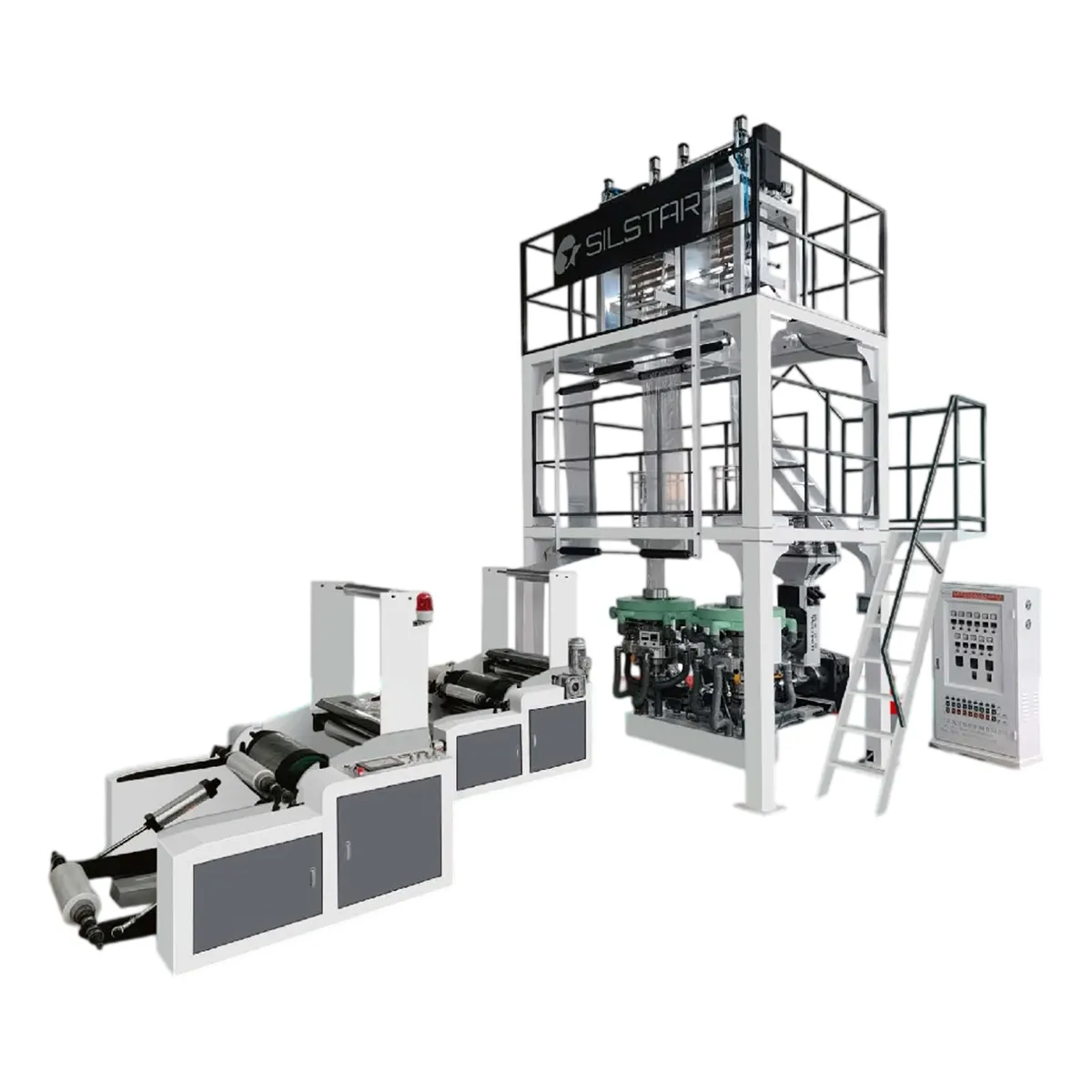
A double die blown film line uses a single-screw extruder and two independent die heads to produce two film rolls simultaneously. During extrusion, the molten polymer passes through a melt distribution system that divides the flow evenly between the two dies, allowing the twin-head blown film machine to form two film bubbles in parallel.
By distributing the output of a single extruder between two die heads, the dual-die configuration supports simultaneous film production for applications requiring large quantities of narrow-width film rolls.

- Materials: HDPE, LDPE, and LLDPE films; films made from recycled materials; CaCO₃-filled films; and biodegradable films, depending on the configuration.
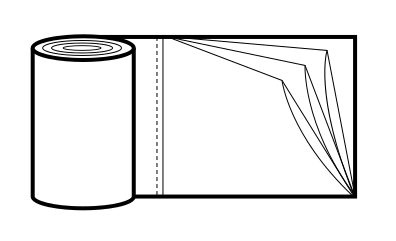
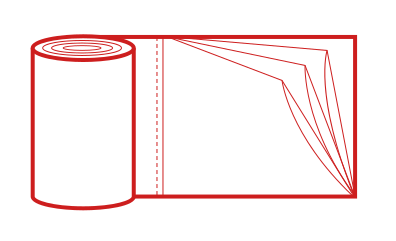
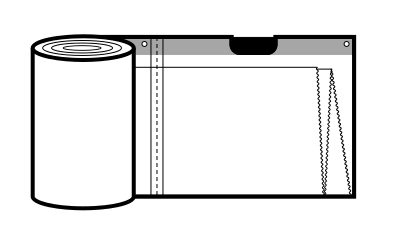
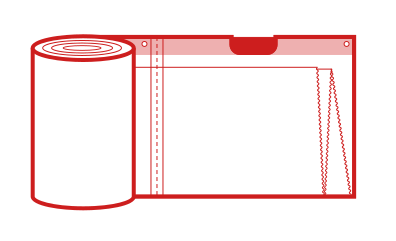
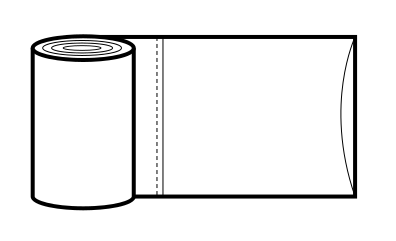
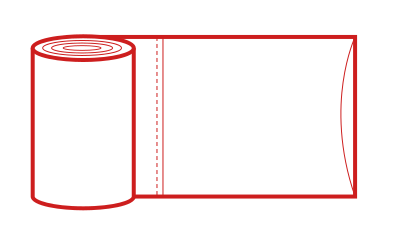
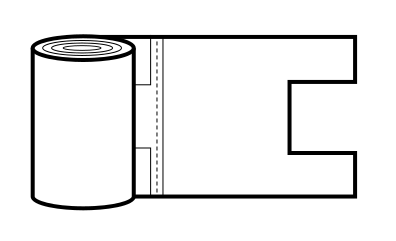
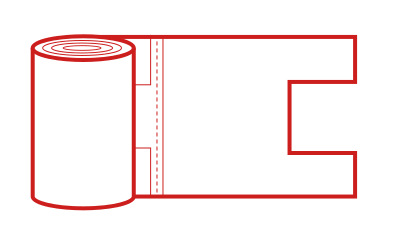
- Applications: Film production for T-shirt bags (vest bags), supermarket shopping bags, garbage bags, kitchen trash bags, dog waste bags, bags on a roll, and food packaging bags.
- Simultaneous Dual-Die Extrusion: One extrusion system feeds two independent die heads, allowing the twin-head blown film machine to produce two film rolls simultaneously. The configuration is particularly suited to narrow-width rolls of approximately 100–400 mm, making use of the output capacity of a larger extruder.
- Reduced Equipment and Installation Requirements: Compared with two separate single-head blown film machines, the shared extrusion arrangement reduces equipment investment and installation space.
- High-Output Narrow Film Production: The single-screw, dual-die configuration is primarily suited to producing narrow-width PE film and film rolls for downstream bag making, particularly for packaging applications requiring large quantities of smaller film widths.
- Continuous Film Production: The two die heads support high-speed, continuous film extrusion, increasing production capacity per unit of floor space.
| Screw L/D Ratio | 32:1 |
| Screw Diameter | 55 / 65 mm |
| Layflat Width | Customized (150–600 mm) |
| Film Thickness | 0.008–0.10 mm |
| Output | 50–150 kg/h |
| Optional Equipment | Automatic roll change, vacuum loading and gravimetric blending system, rotating die |
-
 Single-Screw Extruder (Core Unit)
The core extrusion unit consists of a hopper, screw and barrel, heating bands, gear motor, and variable-frequency drive (VFD).
-
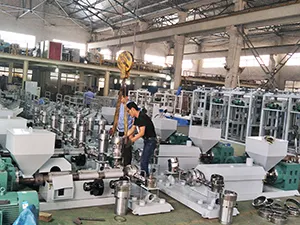 Melting and Plasticizing of Plastic Raw Materials (Core Function of the Screw)
Plastic pellets, including LDPE, HDPE, LLDPE, and PP, enter the extruder barrel through the hopper. As the screw rotates, staged heating and shear friction melt and plasticize the pellets into a homogeneous polymer melt. The rotating screw conveys the molten material steadily toward the die heads.
-
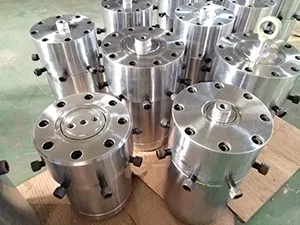 Blown Film Die
The blown film dies distribute the molten polymer and extrude tubular melt through annular die gaps. Compressed air introduced inside each extruded tube inflates the molten material into a film bubble, establishing the initial film width.
-
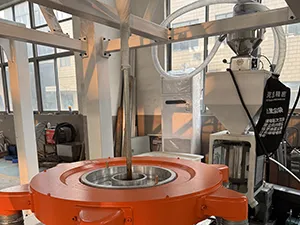 Air Ring Cooling System
The air ring distributes cooling air uniformly around the film bubble, cooling and solidifying the hot polymer to form the film. Cooling airflow adjustments control film transparency and flatness, while the cooling process contributes to film thickness control.
-
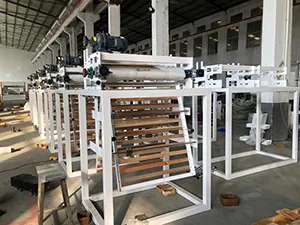 Film Take-Off System and Collapsing Frame
The film take-off system draws the inflated film bubble upward from the extrusion die through the haul-off action of the nip rolls. This drawing action, together with internal bubble inflation, stretches the film in two directions during film formation. As the film bubble rises and cools, the tubular film solidifies before reaching the collapsing frame, which gradually flattens it into layflat film and guides it toward the nip rolls.
-
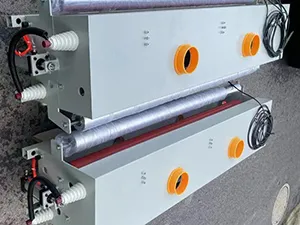 Edge Trimming / Corona Treatment Unit (Optional)
The optional edge-trimming unit trims film edges, while corona treatment improves ink adhesion during film printing.
-
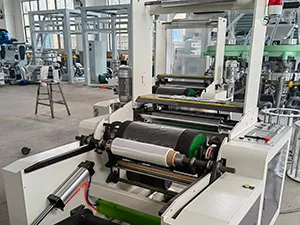 Two-Station Winder (Optional)
After passing through the haul-off system, the film is conveyed to the winding unit, where it is wound at a controlled speed into uniform film rolls. The optional two-station winder enables automatic roll changeover without stopping the production line, allowing continuous production of finished film rolls ready for downstream bag making or printing.
-
- Film thickness adjustment: film thickness can be adjusted from 0.008 mm to 0.1 mm by controlling haul-off speed, bubble air volume and extruder output.
- Mechanical properties: The stretch in two directions helps improve the balance of mechanical properties of the film, including tear properties and toughness.
- Finished film width control: different layflat widths can be obtained by selecting the appropriate die diameter and adjusting the blow-up ratio (BUR).
Nip RollsThe nip rolls pull the flattened film through the collapsing frame at a controlled haul-off speed, maintaining the continuous upward movement of the film. Together with the internal inflation pressure, the drawing process stretches the film in both the machine and transverse directions, affecting film thickness, mechanical properties, and finished width.